Reading contract
What the chapter note asks the reader to do.
Chapter thesis
Soar matters in this course as an architectural wager: general intelligent behavior requires durable mechanisms that constrain every task model while still allowing learning, knowledge, and interaction to vary.
Arrive able to explain why cognitive architectures are needed, what kind of fixed structure Soar proposes, and which tensions should guide the rest of the course.
Learning objectives
- Separate a cognitive architecture from an individual task model.
- Explain why fixed mechanisms can be useful rather than merely restrictive.
- Identify the course-long tension between generality, psychological adequacy, and engineering tractability.
- Preview how the later chapters distribute cognition across control, learning, memory, imagery, emotion, and applications.
Architectural problem
The problem this chapter adds to the course argument.
The opening chapter frames cognitive architecture as a response to fragmentation. Without an architecture, every task model can become a local trick; with too rigid an architecture, a system cannot adapt to the diversity of environments, goals, and knowledge. The lecture note should make that tension visible before students encounter the technical machinery.
Key idea 1
Cognitive architectures make reusable commitments about representation, control, learning, and interaction.
Architecture is a theory of what stays invariant across human-like tasks.
Key idea 2
Soar should be read as both a scientific claim and an engineering substrate.
Soar can be treated as a platform for building agents with shared control commitments.
Key idea 3
The introduction establishes evaluation pressure: breadth alone is not enough unless mechanisms remain coherent across tasks.
The chapter asks readers to judge breadth and mechanism together.
Key idea 4
The chapter previews a cumulative argument rather than a list of disconnected capabilities.
Every later note should ask which part of the claim belongs to Soar itself and which part belongs to a model built in Soar.
Mechanism map
A generated diagram and step sequence for the chapter mechanism.
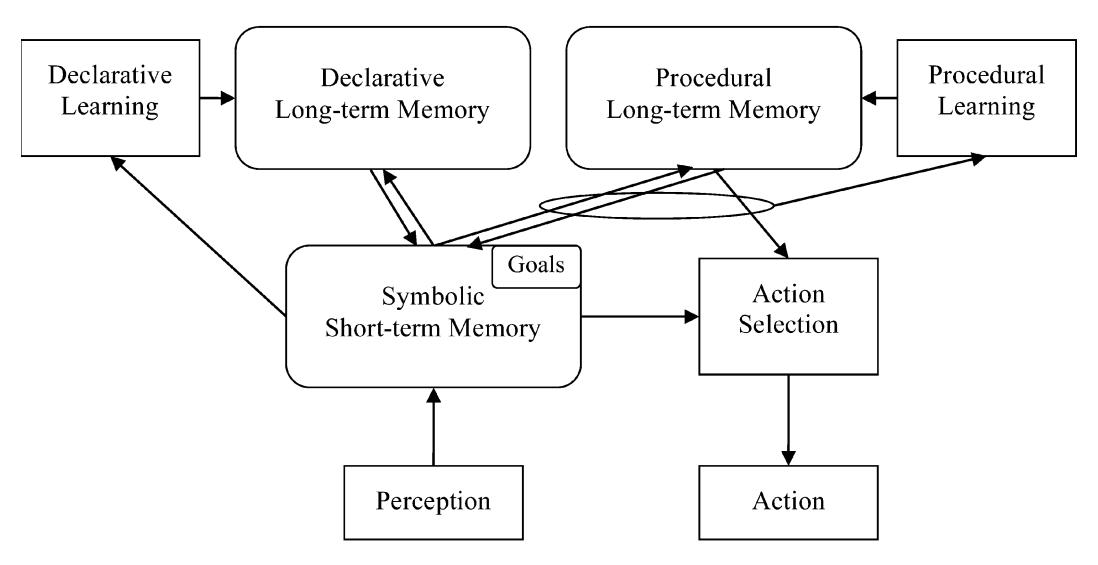
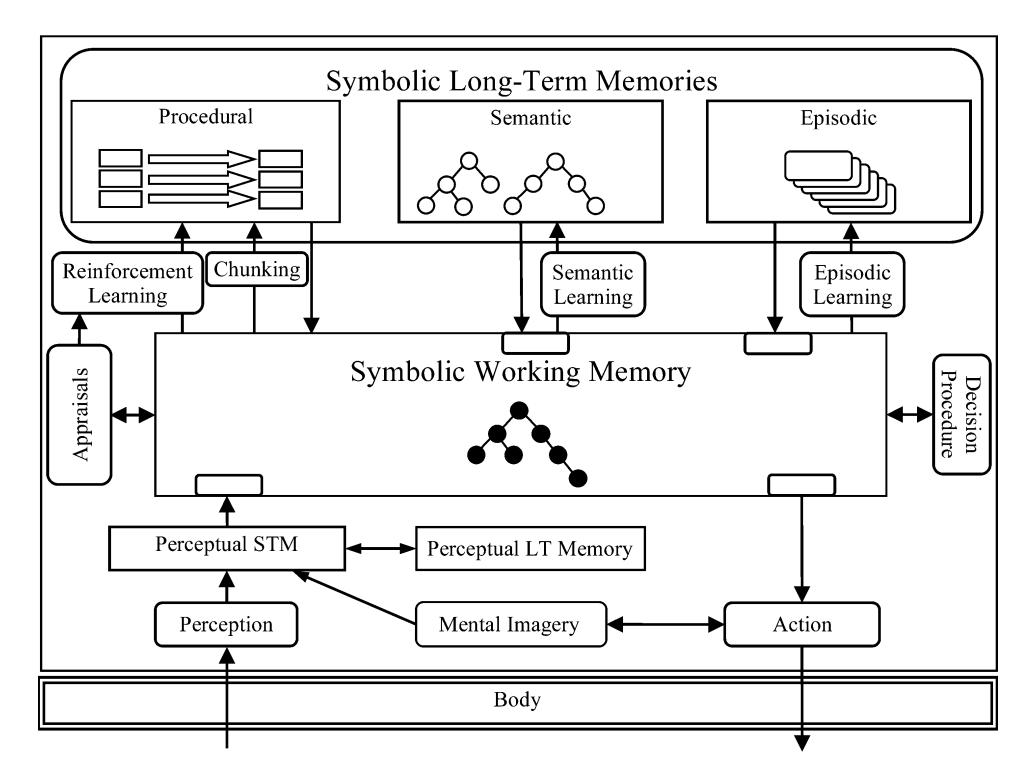
The mechanism at this stage is conceptual rather than algorithmic: define what an architecture fixes, why those commitments matter, and how Soar's history positions the architecture as both a theory of cognition and an implementation strategy for agents.
Mechanism sequence
- Start from the need for general models of intelligent behavior.
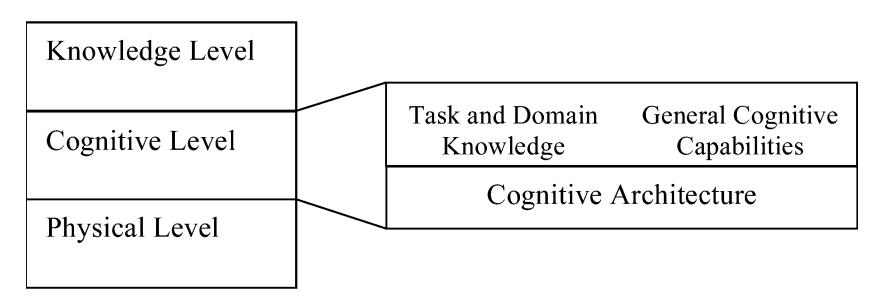
- Distinguish architecture-level commitments from task-specific knowledge.
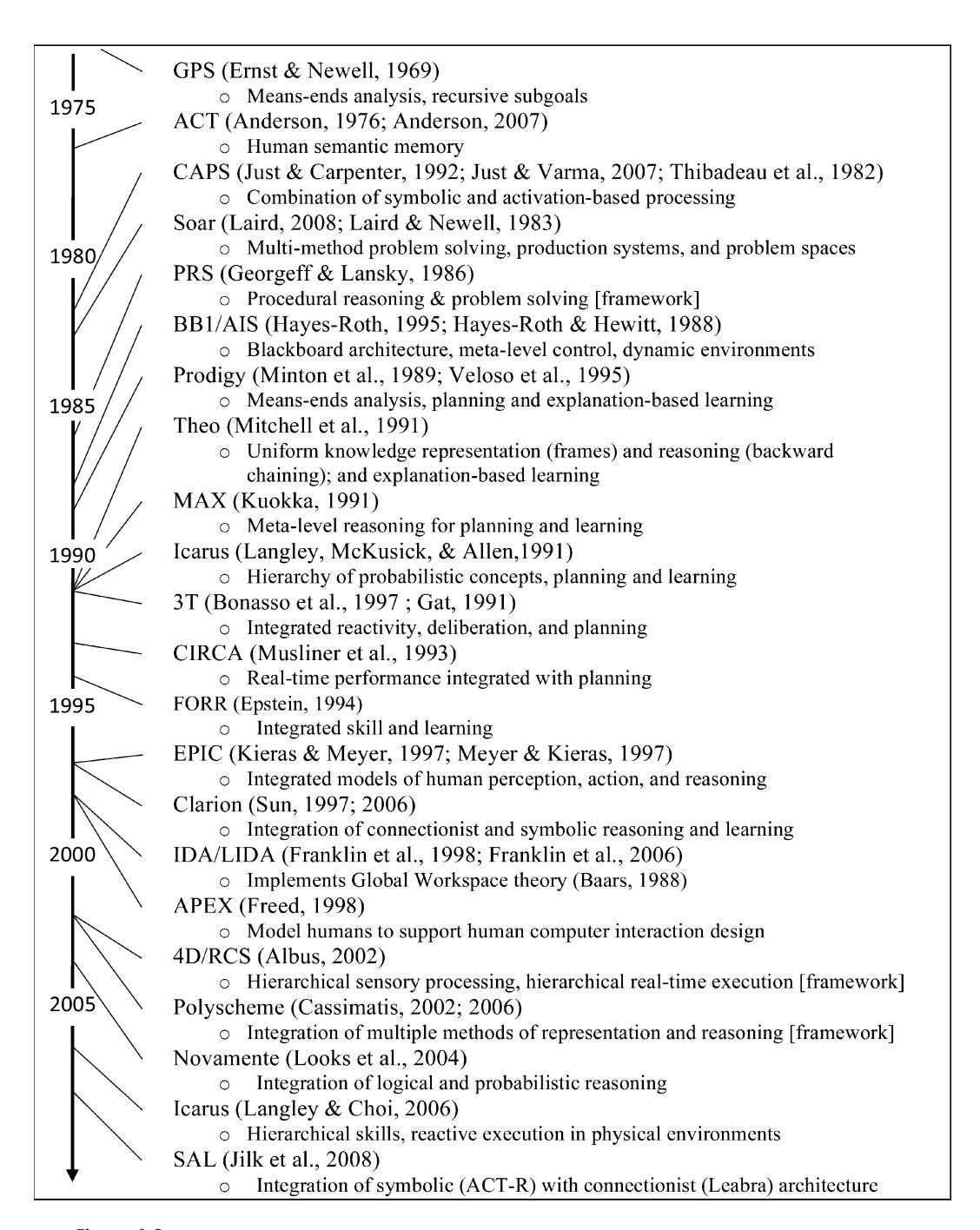
- Locate Soar among multiple approaches to cognitive architecture.
- Preview the chapter sequence as a progressive addition of architectural commitments.
- Carry forward the question: what must remain fixed across tasks?
Polymathic lenses
How the chapter reads across cognitive science, AI architecture, learning, memory, and practice.
| Lens | Use in lecture |
|---|---|
| Cognitive science | Architecture is a theory of what stays invariant across human-like tasks. |
| AI systems | Soar can be treated as a platform for building agents with shared control commitments. |
| Methodology | The chapter asks readers to judge breadth and mechanism together. |
| Course practice | Every later note should ask which part of the claim belongs to Soar itself and which part belongs to a model built in Soar. |
Figures and evidence
Book figures and page anchors that should ground the lecture.
| Claim | Source | Use in lecture | Limit |
|---|---|---|---|
| Cognitive architectures are introduced as a response to the need for general models. | PDF page 11 | Opening frame for the course. | Lecture synthesis should cite this anchor and avoid replacing the source chapter. |
| The chapter distinguishes architectures from narrower task models. | PDF page 17 | Supports the architecture-vs-model lens. | Lecture synthesis should cite this anchor and avoid replacing the source chapter. |
| The chapter previews Chapters 2-14 as a cumulative argument. | PDF page 27 | Supports the unit map and course progression. | Lecture synthesis should cite this anchor and avoid replacing the source chapter. |
Tensions and assumptions
Where the chapter should provoke careful interpretation.
Architecture as constraint
Fixed mechanisms make cumulative theory possible.
A durable architecture lets later chapters ask whether the same control and memory commitments can support many behaviors.
Architecture as risk
The same fixed mechanisms can overfit a theory of mind.
If the architecture fixes the wrong primitives, every later success may hide a compensating task model.
Assumption register
- Lecture explanations paraphrase and synthesize the chapter rather than reproducing it.
- Generated diagrams are instructor-created interpretive diagrams, not copied book figures.
- Claims about modern relevance should be treated as course synthesis unless a later source is added.
Seminar exercise
A concrete activity to turn reading into usable understanding.
Applied task
Choose a familiar intelligent behavior, then list which parts should be fixed by an architecture and which parts should be task knowledge. Bring one borderline case to discussion.
Use the source anchors above when defending the answer.
- What is gained when an architecture fixes mechanisms across tasks?Q1
Prepare an answer with at least one source anchor or a clearly labeled inference.
- When does architectural constraint become theoretical bias?Q2
Prepare an answer with at least one source anchor or a clearly labeled inference.
- Which later chapter looks most likely to test Soar's generality?Q3
Prepare an answer with at least one source anchor or a clearly labeled inference.
| Moment | Action | Owner |
|---|---|---|
| Before class | Read the chapter note and inspect selected figures. | Student |
| During class | Diagram one mechanism step without notes. | Seminar group |
| After class | Add one claim-evidence-limit row to the course matrix. | Student |
Sources
Trace lecture claims to page anchors, extracted figures, and generated project files.
Reviewed sources
- Chapter 1 - Introduction chapter anchor
- Printed start 1; PDF pages 11-35.
- Chapter 1 - Introduction opening page
- Primary opening source for the chapter note.
- Chapter 1 - Introduction closing page
- End of the chapter page range used for synthesis and review.
- Selected figure 1 from Chapter 1 - Introduction
- Extracted image on PDF page 17.
- Selected figure 2 from Chapter 1 - Introduction
- Extracted image on PDF page 20.
- Selected figure 3 from Chapter 1 - Introduction
- Extracted image on PDF page 22.
- Selected figure 4 from Chapter 1 - Introduction
- Extracted image on PDF page 27.
- Cognitive architectures are introduced as a response to the need for general models.
- Opening frame for the course.
- The chapter distinguishes architectures from narrower task models.
- Supports the architecture-vs-model lens.
- The chapter previews Chapters 2-14 as a cumulative argument.
- Supports the unit map and course progression.