Reading contract
What the chapter note asks the reader to do.
Chapter thesis
Chapter 2 turns broad ambition into evaluative discipline: a cognitive architecture must be judged against the kinds of environments, tasks, agents, knowledge, and resource limits it claims to address.
Use the chapter's requirements as an evaluation baseline, then apply that baseline consistently when later chapters claim that a Soar mechanism supports intelligent behavior.
Learning objectives
- Convert the chapter's requirements into reusable evaluation criteria.
- Distinguish environmental, task, agent, and resource pressures.
- Recognize the difference between satisfying a requirement directly and merely not contradicting it.
- Prepare to test later mechanisms against the same requirement vocabulary.
Architectural problem
The problem this chapter adds to the course argument.
Architectural claims are easy to inflate unless the evaluation target is explicit. This chapter supplies the reference frame: environments are complex, regularities occur over multiple time scales, other agents matter, resources are limited, and behavior is long-term and continual.
Key idea 1
Requirements give the course a scoring language.
The chapter supplies criteria rather than a mechanism.
Key idea 2
Resource limits and continual existence force architectural trade-offs.
Requirements define architectural drivers.
Key idea 3
Symbolic representation is only one requirement among many.
Tasks, environments, and agents are treated together.
Key idea 4
The requirements become most useful when revisited after concrete mechanisms appear.
Every later lecture should map its claims back to at least one requirement.
Mechanism map
A generated diagram and step sequence for the chapter mechanism.
The lecture should treat the requirements as a benchmark specification. Later notes can return to the requirement matrix and ask whether a proposed mechanism actually helps with one or more requirements.
Mechanism sequence
- Inventory the kinds of worlds and tasks a general agent must face.
- Name the constraints those worlds impose on architecture.
- Translate constraints into requirements for representation, control, learning, and memory.
- Use the requirements as a benchmark for later mechanisms.
- Revisit the matrix in Chapter 14.
Polymathic lenses
How the chapter reads across cognitive science, AI architecture, learning, memory, and practice.
| Lens | Use in lecture |
|---|---|
| Evaluation | The chapter supplies criteria rather than a mechanism. |
| Systems design | Requirements define architectural drivers. |
| Cognitive scope | Tasks, environments, and agents are treated together. |
| Course practice | Every later lecture should map its claims back to at least one requirement. |
Figures and evidence
Book figures and page anchors that should ground the lecture.
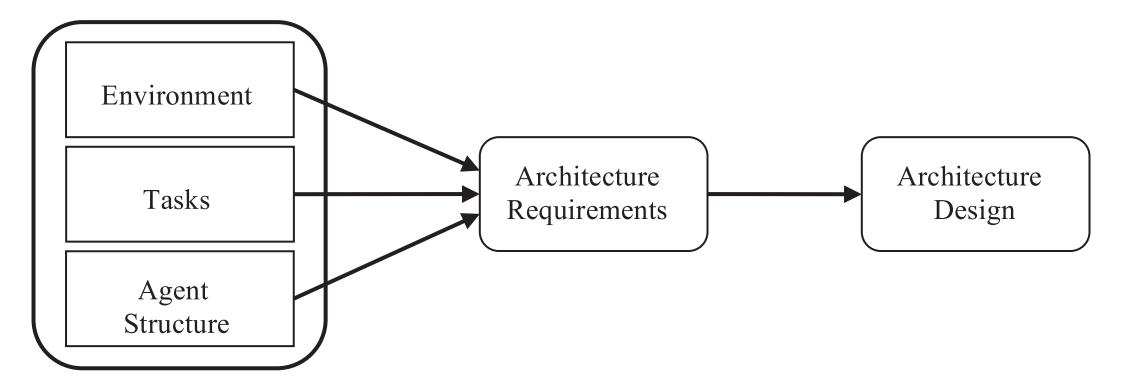
| Claim | Source | Use in lecture | Limit |
|---|---|---|---|
| The chapter characterizes environments, tasks, and agents as the source of requirements. | PDF page 36 | Grounds the benchmark framing. | Lecture synthesis should cite this anchor and avoid replacing the source chapter. |
| The requirements include symbolic representation and resource-aware behavior. | PDF page 40 | Connects requirements to architecture design. | Lecture synthesis should cite this anchor and avoid replacing the source chapter. |
| The conclusion later evaluates Soar against these requirements. | PDF page 327 | Justifies keeping the matrix active through the course. | Lecture synthesis should cite this anchor and avoid replacing the source chapter. |
Tensions and assumptions
Where the chapter should provoke careful interpretation.
Benchmark strength
Requirements prevent vague claims of general intelligence.
The chapter gives readers a way to ask what problem each later mechanism actually solves.
Benchmark limit
Requirements alone do not prove that any architecture is adequate.
They specify pressure but not the full path from mechanism to behavior.
Assumption register
- Lecture explanations paraphrase and synthesize the chapter rather than reproducing it.
- Generated diagrams are instructor-created interpretive diagrams, not copied book figures.
- Claims about modern relevance should be treated as course synthesis unless a later source is added.
Seminar exercise
A concrete activity to turn reading into usable understanding.
Applied task
Build a requirement matrix with columns for control, learning, memory, perception, affect, and application. Mark which requirements are directly addressed by each later chapter.
Use the source anchors above when defending the answer.
- Which requirement is most demanding for a symbolic architecture?Q1
Prepare an answer with at least one source anchor or a clearly labeled inference.
- Which requirement is easiest to state but hardest to demonstrate?Q2
Prepare an answer with at least one source anchor or a clearly labeled inference.
- How should we treat a mechanism that satisfies one requirement by weakening another?Q3
Prepare an answer with at least one source anchor or a clearly labeled inference.
| Moment | Action | Owner |
|---|---|---|
| Before class | Read the chapter note and inspect selected figures. | Student |
| During class | Diagram one mechanism step without notes. | Seminar group |
| After class | Add one claim-evidence-limit row to the course matrix. | Student |
Sources
Trace lecture claims to page anchors, extracted figures, and generated project files.
Reviewed sources
- Chapter 2 - Requirements for Cognitive Architectures chapter anchor
- Printed start 27; PDF pages 36-50.
- Chapter 2 - Requirements for Cognitive Architectures opening page
- Primary opening source for the chapter note.
- Chapter 2 - Requirements for Cognitive Architectures closing page
- End of the chapter page range used for synthesis and review.
- Selected figure 1 from Chapter 2 - Requirements for Cognitive Architectures
- Extracted image on PDF page 37.
- The chapter characterizes environments, tasks, and agents as the source of requirements.
- Grounds the benchmark framing.
- The requirements include symbolic representation and resource-aware behavior.
- Connects requirements to architecture design.
- The conclusion later evaluates Soar against these requirements.
- Justifies keeping the matrix active through the course.