Reading contract
What the chapter note asks the reader to do.
Chapter thesis
The PSCM is the first technical spine of the course: it describes intelligent activity as movement through problem spaces by operators whose proposal, evaluation, selection, and application can be made explicit.
Evaluate the problem-space computational model as a proposed design answer to intelligent behavior, then explain how states, operators, proposal, evaluation, and application form a control discipline.
Learning objectives
- Define states, operators, problems, and problem spaces.
- Explain why minimal knowledge search is insufficient for rich agents.
- Trace the PSCM cycle from proposal through application.
- Prepare to map the PSCM onto Soar's working memory and production rules.
Architectural problem
The problem this chapter adds to the course argument.
Before Soar's implementation details appear, the course needs a computational model of problem solving. Chapter 3 supplies that model and asks readers to see intelligence as structured search and operator-mediated transformation rather than unorganized action.
Key idea 1
Problem solving is framed as operator-mediated transformation.
The chapter defines a reusable control loop.
Key idea 2
Knowledge influences which operators are proposed, evaluated, and applied.
Knowledge is not monolithic; it participates in proposal, evaluation, and application.
Key idea 3
The PSCM can interact with an external environment, not only internal puzzles.
The external environment can be part of the cycle.
Key idea 4
Impasses and substates are foreshadowed as consequences of incomplete progress.
The PSCM is a design contract that Soar must implement.
Mechanism map
A generated diagram and step sequence for the chapter mechanism.
Problem spaces contain states, operators, and knowledge for proposing, evaluating, and applying operators. The PSCM processing cycle provides a conceptual control loop that Chapter 4 maps into Soar's production-system implementation.
Mechanism sequence
- Represent the current state.
- Propose candidate operators.
- Evaluate candidates using available knowledge.
- Select an operator.
- Apply it to change the state or environment.
- Encounter an impasse when the cycle cannot proceed cleanly.
Polymathic lenses
How the chapter reads across cognitive science, AI architecture, learning, memory, and practice.
| Lens | Use in lecture |
|---|---|
| Computation | The chapter defines a reusable control loop. |
| Knowledge | Knowledge is not monolithic; it participates in proposal, evaluation, and application. |
| Embodiment | The external environment can be part of the cycle. |
| Architecture | The PSCM is a design contract that Soar must implement. |
Figures and evidence
Book figures and page anchors that should ground the lecture.
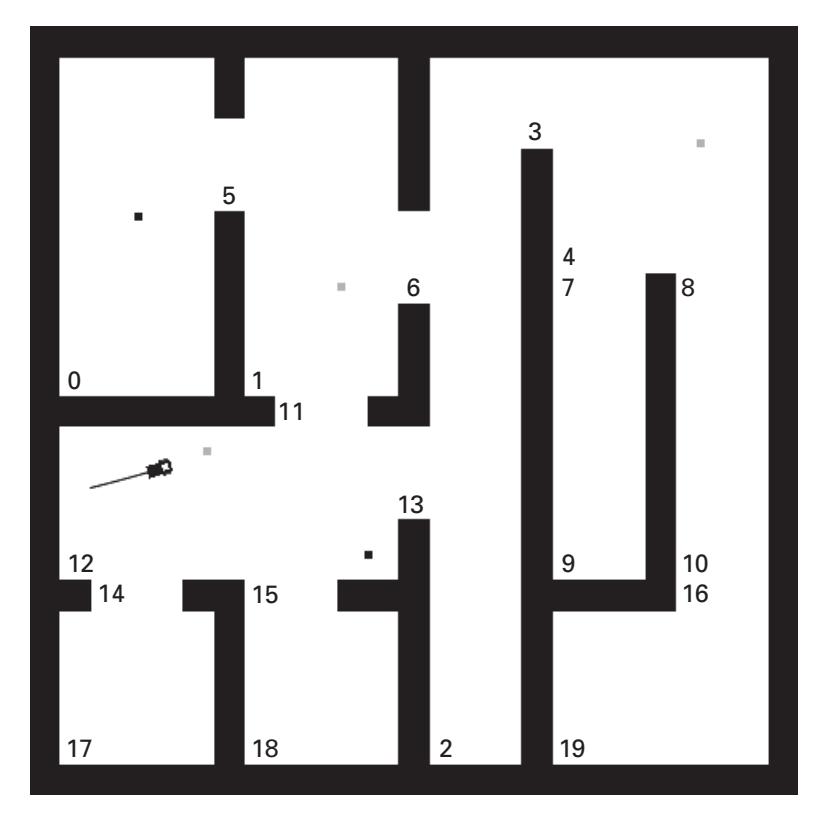
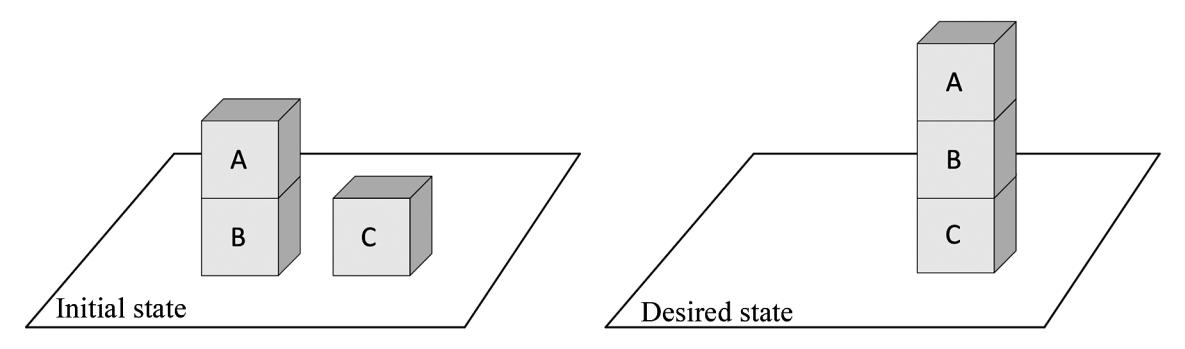
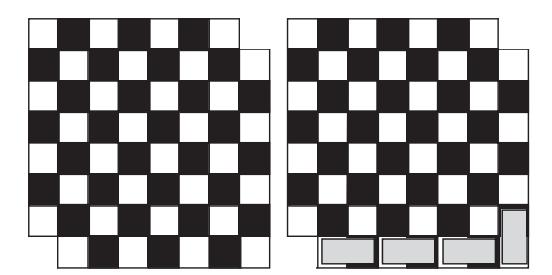

| Claim | Source | Use in lecture | Limit |
|---|---|---|---|
| The chapter develops states, operators, and problem spaces as representational primitives. | PDF page 51 | Defines the formal vocabulary. | Lecture synthesis should cite this anchor and avoid replacing the source chapter. |
| Knowledge-based proposal, evaluation, and application are central to the PSCM. | PDF page 65 | Supports the control-loop diagram. | Lecture synthesis should cite this anchor and avoid replacing the source chapter. |
| Impasses and substates are introduced as the next architectural issue. | PDF page 75 | Prepares Chapter 5. | Lecture synthesis should cite this anchor and avoid replacing the source chapter. |
Tensions and assumptions
Where the chapter should provoke careful interpretation.
Modeling power
The PSCM makes control explicit.
A reader can inspect where knowledge affects behavior instead of treating action choice as opaque.
Modeling burden
Every behavior must be cast in problem-space terms.
The model's clarity becomes a demand: represent tasks, operators, and evaluation knowledge carefully enough to matter.
Assumption register
- Lecture explanations paraphrase and synthesize the chapter rather than reproducing it.
- Generated diagrams are instructor-created interpretive diagrams, not copied book figures.
- Claims about modern relevance should be treated as course synthesis unless a later source is added.
Seminar exercise
A concrete activity to turn reading into usable understanding.
Applied task
Take a planning task and write a one-page PSCM model: states, operators, proposal knowledge, evaluation knowledge, application knowledge, and one possible impasse.
Use the source anchors above when defending the answer.
- Which part of the PSCM carries the most theoretical weight?Q1
Prepare an answer with at least one source anchor or a clearly labeled inference.
- What kinds of tasks resist clean operator decomposition?Q2
Prepare an answer with at least one source anchor or a clearly labeled inference.
- Does the PSCM explain intelligence, or does it mainly organize implementation?Q3
Prepare an answer with at least one source anchor or a clearly labeled inference.
| Moment | Action | Owner |
|---|---|---|
| Before class | Read the chapter note and inspect selected figures. | Student |
| During class | Diagram one mechanism step without notes. | Seminar group |
| After class | Add one claim-evidence-limit row to the course matrix. | Student |
Sources
Trace lecture claims to page anchors, extracted figures, and generated project files.
Reviewed sources
- Chapter 3 - The Problem-Space Computational Model chapter anchor
- Printed start 43; PDF pages 51-76.
- Chapter 3 - The Problem-Space Computational Model opening page
- Primary opening source for the chapter note.
- Chapter 3 - The Problem-Space Computational Model closing page
- End of the chapter page range used for synthesis and review.
- Selected figure 1 from Chapter 3 - The Problem-Space Computational Model
- Extracted image on PDF page 54.
- Selected figure 2 from Chapter 3 - The Problem-Space Computational Model
- Extracted image on PDF page 55.
- Selected figure 3 from Chapter 3 - The Problem-Space Computational Model
- Extracted image on PDF page 61.
- Selected figure 4 from Chapter 3 - The Problem-Space Computational Model
- Extracted image on PDF page 65.
- The chapter develops states, operators, and problem spaces as representational primitives.
- Defines the formal vocabulary.
- Knowledge-based proposal, evaluation, and application are central to the PSCM.
- Supports the control-loop diagram.
- Impasses and substates are introduced as the next architectural issue.
- Prepares Chapter 5.