Reading contract
What the chapter note asks the reader to do.
Chapter thesis
Chapter 4 is the architecture's operational center: the PSCM becomes a production-system cycle in which working memory, rule firing, preferences, operator decisions, and learning cooperate to produce behavior.
Trace Soar's processing cycle from input through elaboration, operator proposal, evaluation, selection, application, output, and learning, then identify where each PSCM commitment becomes executable machinery.
Learning objectives
- Map PSCM concepts onto Soar implementation structures.
- Explain the role of working memory and production memory.
- Trace the Soar processing cycle without skipping preference formation.
- Distinguish elaboration, operator proposal, operator evaluation, selection, application, and output.
Architectural problem
The problem this chapter adds to the course argument.
The PSCM is a model until it has executable commitments. Chapter 4 shows how Soar turns problem-space vocabulary into data structures and control phases that can run repeatedly in an agent.
Key idea 1
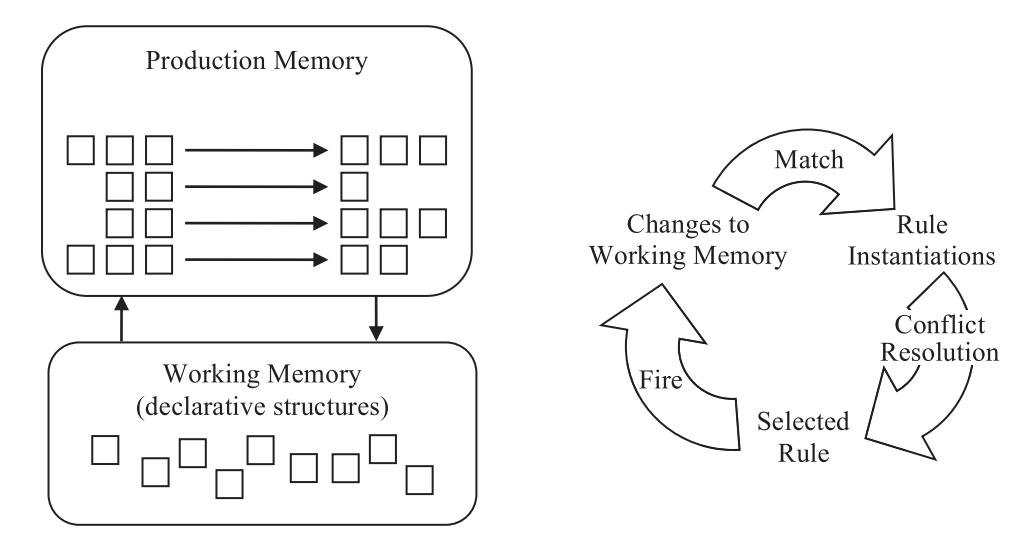
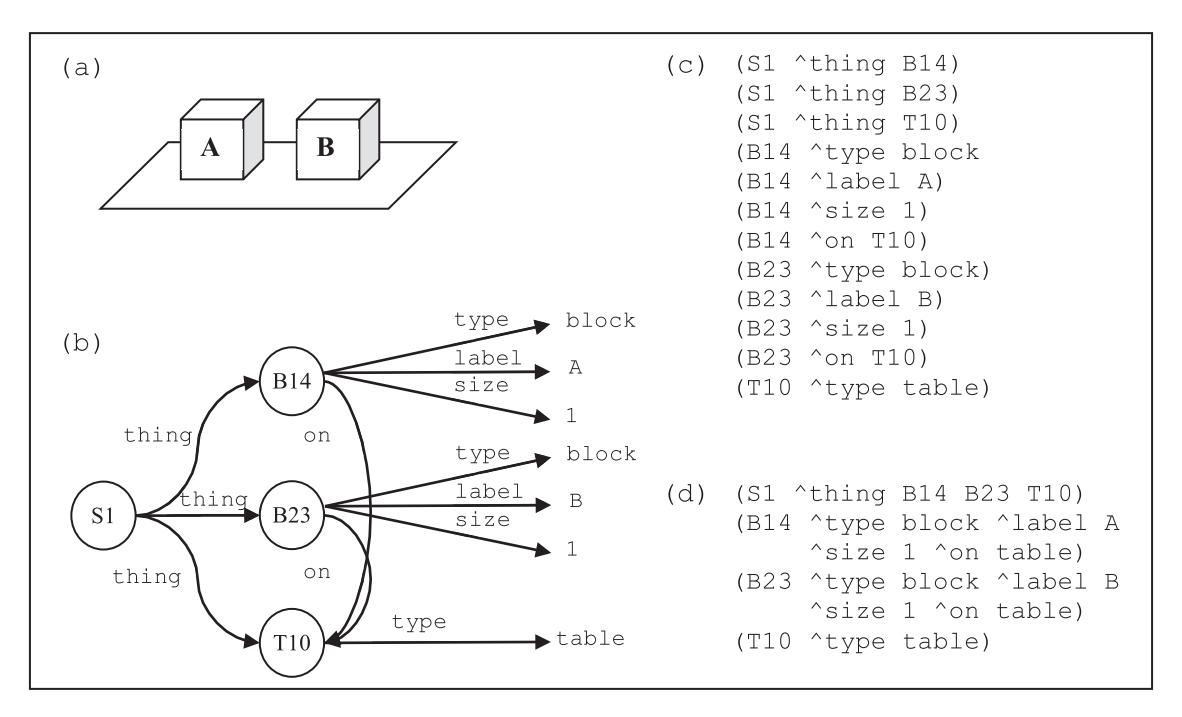
Working memory is the current structured situation against which productions match.
This chapter defines the executable boundary of Soar.
Key idea 2
Productions add, evaluate, or apply knowledge without directly replacing the whole architecture.
Preferences and decision procedures make selection inspectable.
Key idea 3
Preferences mediate operator selection rather than making choice an unstructured side effect.
Later learning chapters attach to the processing cycle established here.
Key idea 4
The processing cycle is the scaffold for later learning and memory mechanisms.
The chapter can be read like an architecture review of interfaces and state transitions.
Mechanism map
A generated diagram and step sequence for the chapter mechanism.
Soar maps state representation into working memory, knowledge into production rules, operators into working-memory structures, and control into a repeated decision cycle. The mechanism is not one rule firing; it is the disciplined coordination of elaboration, proposal, evaluation, selection, application, output, and learning.
Mechanism sequence
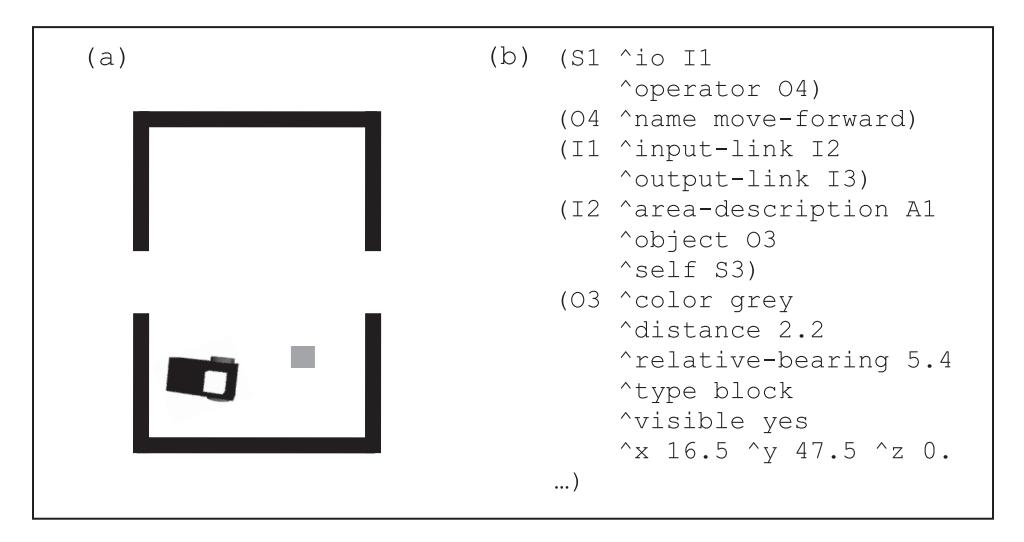
- Input updates working memory from the environment.
- Elaboration rules infer additional structure.
- Proposal rules create candidate operators.
- Evaluation rules produce preferences among candidates.
- The decision procedure selects an operator or detects an impasse.
- Application rules change working memory or produce output.
- Learning mechanisms use the episode of processing to modify future behavior.
Polymathic lenses
How the chapter reads across cognitive science, AI architecture, learning, memory, and practice.
| Lens | Use in lecture |
|---|---|
| Architecture | This chapter defines the executable boundary of Soar. |
| Control | Preferences and decision procedures make selection inspectable. |
| Learning | Later learning chapters attach to the processing cycle established here. |
| Engineering | The chapter can be read like an architecture review of interfaces and state transitions. |
Figures and evidence
Book figures and page anchors that should ground the lecture.

| Claim | Source | Use in lecture | Limit |
|---|---|---|---|
| The chapter maps production systems onto the PSCM. | PDF page 77 | Grounds the architecture-review template. | Lecture synthesis should cite this anchor and avoid replacing the source chapter. |
| Working memory, rule representation, and operators are treated as implementation structures. | PDF page 82 | Supports the system model. | Lecture synthesis should cite this anchor and avoid replacing the source chapter. |
| The Soar processing cycle is introduced as the operating loop. | PDF page 99 | Supports the generated cycle diagram. | Lecture synthesis should cite this anchor and avoid replacing the source chapter. |
Tensions and assumptions
Where the chapter should provoke careful interpretation.
Uniformity
A single cycle coordinates many cognitive functions.
The same architecture can host task reasoning, operator choice, memory access, and learning hooks.
Complexity
Uniform cycles can hide many moving parts.
A serious reader must track which knowledge source changes which part of working memory and when.
Assumption register
- Lecture explanations paraphrase and synthesize the chapter rather than reproducing it.
- Generated diagrams are instructor-created interpretive diagrams, not copied book figures.
- Claims about modern relevance should be treated as course synthesis unless a later source is added.
Seminar exercise
A concrete activity to turn reading into usable understanding.
Applied task
Draw a trace table for one operator decision. Include working-memory conditions, matching productions, proposed operators, preferences, selected operator, and resulting working-memory changes.
Use the source anchors above when defending the answer.
- What is the architectural advantage of representing operators in working memory?Q1
Prepare an answer with at least one source anchor or a clearly labeled inference.
- Where does Soar's cycle most clearly implement the PSCM?Q2
Prepare an answer with at least one source anchor or a clearly labeled inference.
- Which phase becomes hardest to inspect in a large model?Q3
Prepare an answer with at least one source anchor or a clearly labeled inference.
| Moment | Action | Owner |
|---|---|---|
| Before class | Read the chapter note and inspect selected figures. | Student |
| During class | Diagram one mechanism step without notes. | Seminar group |
| After class | Add one claim-evidence-limit row to the course matrix. | Student |
Sources
Trace lecture claims to page anchors, extracted figures, and generated project files.
Reviewed sources
- Chapter 4 - Soar as an Implementation of the PSCM chapter anchor
- Printed start 69; PDF pages 77-125.
- Chapter 4 - Soar as an Implementation of the PSCM opening page
- Primary opening source for the chapter note.
- Chapter 4 - Soar as an Implementation of the PSCM closing page
- End of the chapter page range used for synthesis and review.
- Selected figure 1 from Chapter 4 - Soar as an Implementation of the PSCM
- Extracted image on PDF page 78.
- Selected figure 2 from Chapter 4 - Soar as an Implementation of the PSCM
- Extracted image on PDF page 82.
- Selected figure 3 from Chapter 4 - Soar as an Implementation of the PSCM
- Extracted image on PDF page 83.
- Selected figure 4 from Chapter 4 - Soar as an Implementation of the PSCM
- Extracted image on PDF page 87.
- The chapter maps production systems onto the PSCM.
- Grounds the architecture-review template.
- Working memory, rule representation, and operators are treated as implementation structures.
- Supports the system model.
- The Soar processing cycle is introduced as the operating loop.
- Supports the generated cycle diagram.