Reading contract
What the chapter note asks the reader to do.
Chapter thesis
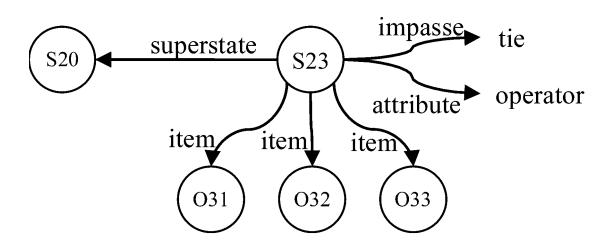
Impasses are not mere error cases in Soar; they are architectural events that create new problem-solving contexts, allowing the system to reason about blocked progress.
Explain how Soar converts failure to select or apply an operator into a substate for further reasoning, then evaluate why that mechanism supports complex reasoning and metacognition.
Learning objectives
- Name major impasse types and explain why they arise.
- Trace how a substate gives the architecture a new problem-solving context.
- Explain hierarchical task decomposition through substates.
- Evaluate the promise and cost of metacognitive processing.
Architectural problem
The problem this chapter adds to the course argument.
Simple operator choice cannot handle all situations. An agent may face no acceptable operator, tied operators, conflicting preferences, or missing application knowledge. The chapter asks how the architecture should proceed when ordinary control is underdetermined.
Key idea 1
An impasse is an architectural trigger for more reasoning, not a terminal failure.
Impasses define what the architecture does when ordinary selection is insufficient.
Key idea 2
Substates make recursive problem solving part of the control architecture.
Reasoning can be viewed as resolving obstacles in ongoing activity.
Key idea 3
Hierarchical decomposition can emerge from ordinary control failures.
The system can reason about its own reasoning state.
Key idea 4
Metacognition becomes plausible when control states themselves are represented and reasoned about.
Substates demand disciplined trace analysis.
Mechanism map
A generated diagram and step sequence for the chapter mechanism.
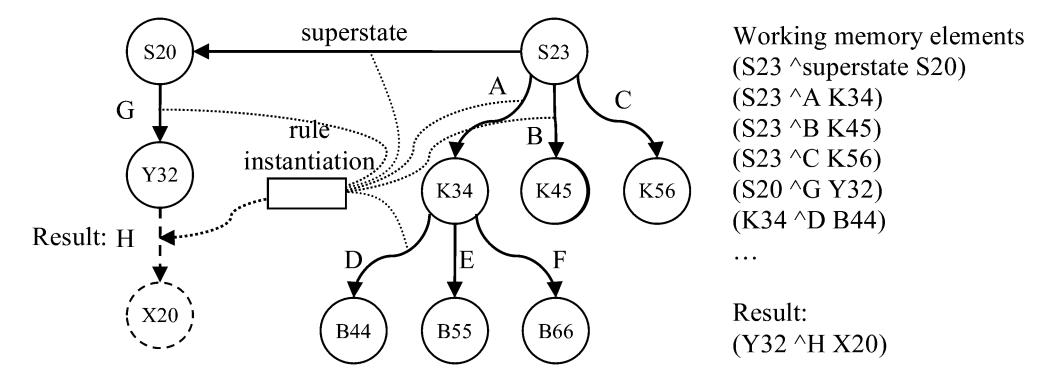
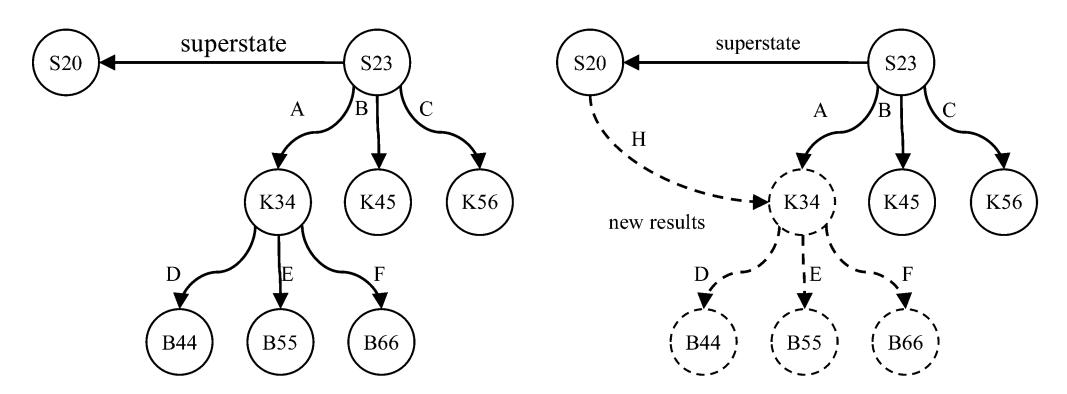
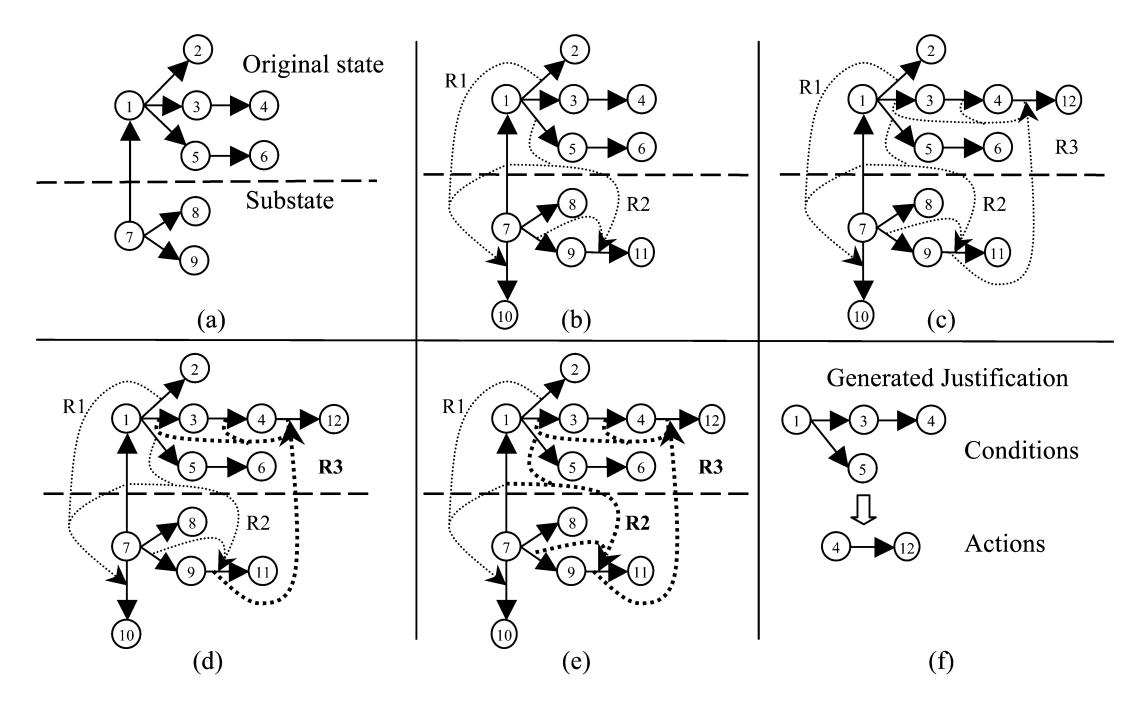
Soar detects impasses and creates substates in which additional reasoning can occur. Those substates can decompose tasks, deliberate about control, and even support metacognitive processing before results return to the higher-level context.
Mechanism sequence
- Normal operator selection reaches an underdetermined or blocked point.
- The architecture classifies the impasse.
- A substate is created with relevant context.
- Reasoning in the substate proposes, evaluates, or constructs the missing support.
- The result resolves or reframes the higher-level decision.
- Nested substates can create a hierarchy of reasoning contexts.
Polymathic lenses
How the chapter reads across cognitive science, AI architecture, learning, memory, and practice.
| Lens | Use in lecture |
|---|---|
| Control theory | Impasses define what the architecture does when ordinary selection is insufficient. |
| Cognition | Reasoning can be viewed as resolving obstacles in ongoing activity. |
| Metacognition | The system can reason about its own reasoning state. |
| Modeling practice | Substates demand disciplined trace analysis. |
Figures and evidence
Book figures and page anchors that should ground the lecture.
| Claim | Source | Use in lecture | Limit |
|---|---|---|---|
| The chapter names multiple impasse types. | PDF page 126 | Grounds the technical investigation. | Lecture synthesis should cite this anchor and avoid replacing the source chapter. |
| Substates support hierarchical task decomposition examples. | PDF page 139 | Supports the recursive-context diagram. | Lecture synthesis should cite this anchor and avoid replacing the source chapter. |
| The chapter includes deliberate reasoning about control and metacognitive processing. | PDF page 157 | Supports the metacognition lens. | Lecture synthesis should cite this anchor and avoid replacing the source chapter. |
Tensions and assumptions
Where the chapter should provoke careful interpretation.
Reasoning leverage
Failure becomes a resource for structured thought.
The architecture can decompose, deliberate, and inspect its own control problems.
Reasoning cost
Recursive substates can add interpretive and computational depth.
The mechanism is powerful only if readers can track when substates clarify control rather than multiplying machinery.
Assumption register
- Lecture explanations paraphrase and synthesize the chapter rather than reproducing it.
- Generated diagrams are instructor-created interpretive diagrams, not copied book figures.
- Claims about modern relevance should be treated as course synthesis unless a later source is added.
Seminar exercise
A concrete activity to turn reading into usable understanding.
Applied task
Construct one operator-tie and one state-no-change example. For each, describe the substate goal, the reasoning that would occur there, and the condition that resolves the impasse.
Use the source anchors above when defending the answer.
- Which impasse type best illustrates Soar's theory of reasoning?Q1
Prepare an answer with at least one source anchor or a clearly labeled inference.
- When should a modeler prefer direct knowledge over substate reasoning?Q2
Prepare an answer with at least one source anchor or a clearly labeled inference.
- Does metacognition require a special module, or can it emerge from represented control problems?Q3
Prepare an answer with at least one source anchor or a clearly labeled inference.
| Moment | Action | Owner |
|---|---|---|
| Before class | Read the chapter note and inspect selected figures. | Student |
| During class | Diagram one mechanism step without notes. | Seminar group |
| After class | Add one claim-evidence-limit row to the course matrix. | Student |
Sources
Trace lecture claims to page anchors, extracted figures, and generated project files.
Reviewed sources
- Chapter 5 - Impasses and Substates: The Basis for Complex Reasoning chapter anchor
- Printed start 119; PDF pages 126-164.
- Chapter 5 - Impasses and Substates: The Basis for Complex Reasoning opening page
- Primary opening source for the chapter note.
- Chapter 5 - Impasses and Substates: The Basis for Complex Reasoning closing page
- End of the chapter page range used for synthesis and review.
- Selected figure 1 from Chapter 5 - Impasses and Substates: The Basis for Complex Reasoning
- Extracted image on PDF page 129.
- Selected figure 2 from Chapter 5 - Impasses and Substates: The Basis for Complex Reasoning
- Extracted image on PDF page 132.
- Selected figure 3 from Chapter 5 - Impasses and Substates: The Basis for Complex Reasoning
- Extracted image on PDF page 133.
- Selected figure 4 from Chapter 5 - Impasses and Substates: The Basis for Complex Reasoning
- Extracted image on PDF page 134.
- The chapter names multiple impasse types.
- Grounds the technical investigation.
- Substates support hierarchical task decomposition examples.
- Supports the recursive-context diagram.
- The chapter includes deliberate reasoning about control and metacognitive processing.
- Supports the metacognition lens.