Reading contract
What the chapter note asks the reader to do.
Chapter thesis
Semantic memory expands Soar beyond production rules and immediate working memory by adding a long-term knowledge resource that can be queried and integrated into ongoing reasoning.
Trace how semantic memory gives Soar access to large bodies of declarative knowledge, then explain how encoding, storage, retrieval, and working-memory integration change the architecture.
Learning objectives
- Explain why semantic memory is architecturally distinct from production memory.
- Describe encoding, storage, and retrieval at a high level.
- Trace how retrieved knowledge enters working memory.
- Prepare to compare semantic and episodic memory.
Architectural problem
The problem this chapter adds to the course argument.
Production memory and working memory cannot carry every fact an agent may need. Chapter 8 asks how a cognitive architecture can represent, store, and retrieve large amounts of relatively stable knowledge.
Key idea 1
Semantic memory supports large-scale declarative knowledge.
Semantic memory represents relatively stable knowledge.
Key idea 2
Retrieval is useful only when integrated with current reasoning.
Retrieval must feed working memory at the right time.
Key idea 3
Memory introduces latency, relevance, and cueing questions.
The system now includes multiple long-term stores with different roles.
Key idea 4
The chapter sets up a contrast with episodic experience.
Semantic memory answers different questions than episodic memory.
Mechanism map
A generated diagram and step sequence for the chapter mechanism.
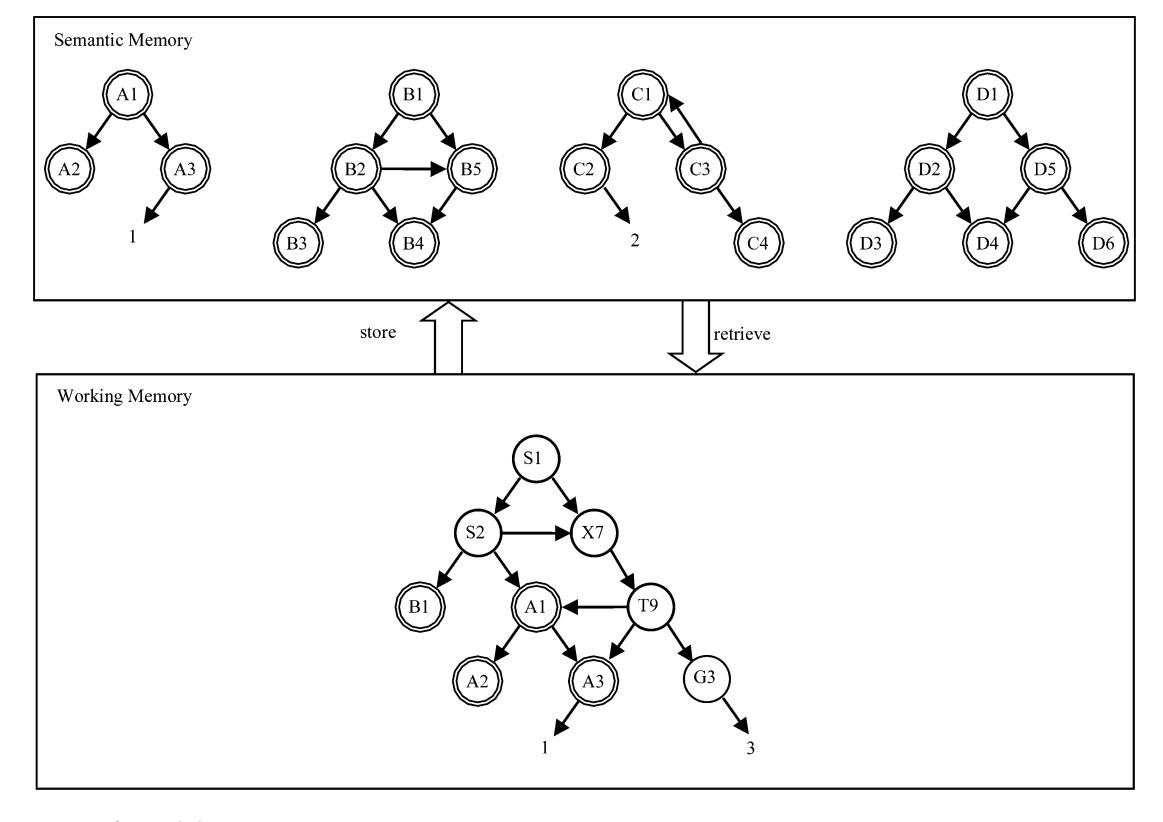
Semantic memory stores structured declarative knowledge and retrieves relevant content into working memory when cued. The mechanism matters architecturally because retrieval must cooperate with the processing cycle rather than bypass it.
Mechanism sequence
- Current reasoning produces a need or cue.
- Relevant semantic structures are encoded or already stored.
- The memory system retrieves matching knowledge.
- Retrieved content enters working memory.
- Productions use that content in the ordinary cycle.
Polymathic lenses
How the chapter reads across cognitive science, AI architecture, learning, memory, and practice.
| Lens | Use in lecture |
|---|---|
| Memory | Semantic memory represents relatively stable knowledge. |
| Control | Retrieval must feed working memory at the right time. |
| Architecture | The system now includes multiple long-term stores with different roles. |
| Comparison | Semantic memory answers different questions than episodic memory. |
Figures and evidence
Book figures and page anchors that should ground the lecture.
| Claim | Source | Use in lecture | Limit |
|---|---|---|---|
| The chapter introduces semantic memory as a distinct capability. | PDF page 208 | Grounds the architecture review. | Lecture synthesis should cite this anchor and avoid replacing the source chapter. |
| Encoding and storage are treated explicitly. | PDF page 212 | Supports the storage model. | Lecture synthesis should cite this anchor and avoid replacing the source chapter. |
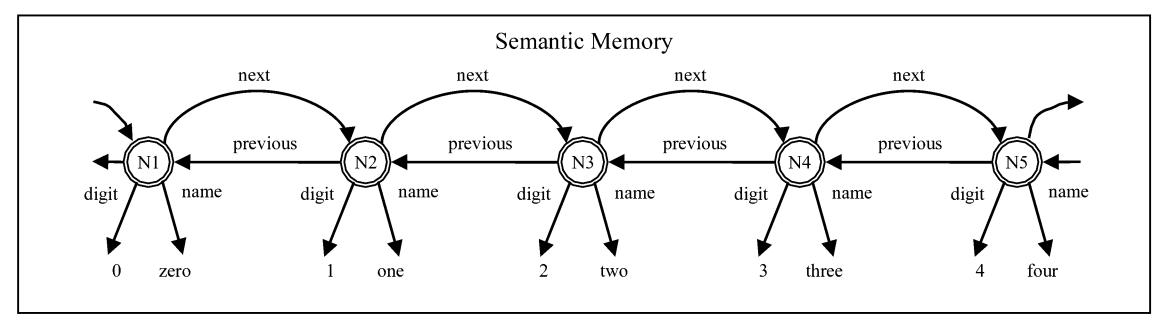
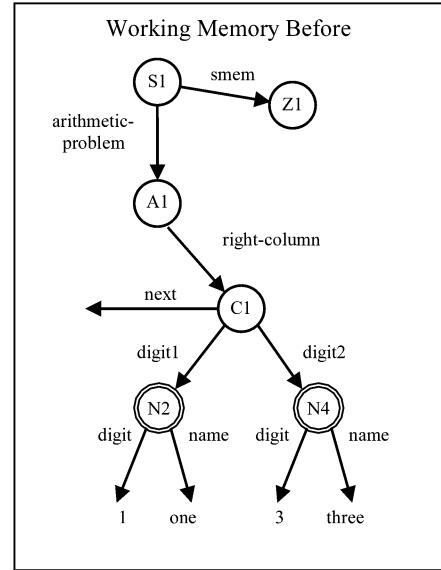
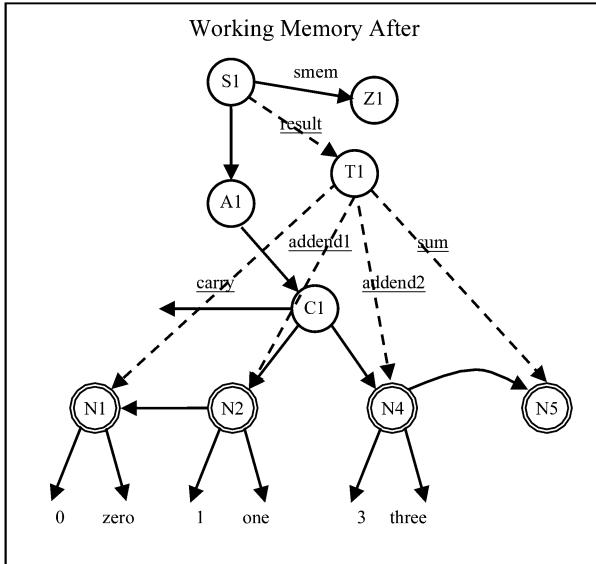
| Multiple figures show semantic-memory structures and retrieval examples. | PDF page 216 | Supports the figure-centered study. | Lecture synthesis should cite this anchor and avoid replacing the source chapter. |
Tensions and assumptions
Where the chapter should provoke careful interpretation.
Knowledge scale
Semantic memory helps Soar handle large declarative stores.
The architecture gains a resource for facts and relations that should not all be compiled into productions.
Retrieval burden
Large memory is useful only if retrieval is relevant.
A memory system creates new architectural questions about cues, selection, and integration.
Assumption register
- Lecture explanations paraphrase and synthesize the chapter rather than reproducing it.
- Generated diagrams are instructor-created interpretive diagrams, not copied book figures.
- Claims about modern relevance should be treated as course synthesis unless a later source is added.
Seminar exercise
A concrete activity to turn reading into usable understanding.
Applied task
Choose a task requiring background facts. Specify what should live in semantic memory, what should remain in productions, and what cue would retrieve the needed knowledge.
Use the source anchors above when defending the answer.
- What kind of knowledge should not be compiled into productions?Q1
Prepare an answer with at least one source anchor or a clearly labeled inference.
- How does retrieval change the meaning of the working-memory state?Q2
Prepare an answer with at least one source anchor or a clearly labeled inference.
- Where does semantic memory create new failure modes?Q3
Prepare an answer with at least one source anchor or a clearly labeled inference.
| Moment | Action | Owner |
|---|---|---|
| Before class | Read the chapter note and inspect selected figures. | Student |
| During class | Diagram one mechanism step without notes. | Seminar group |
| After class | Add one claim-evidence-limit row to the course matrix. | Student |
Sources
Trace lecture claims to page anchors, extracted figures, and generated project files.
Reviewed sources
- Chapter 8 - Semantic Memory chapter anchor
- Printed start 203; PDF pages 208-229.
- Chapter 8 - Semantic Memory opening page
- Primary opening source for the chapter note.
- Chapter 8 - Semantic Memory closing page
- End of the chapter page range used for synthesis and review.
- Selected figure 1 from Chapter 8 - Semantic Memory
- Extracted image on PDF page 212.
- Selected figure 2 from Chapter 8 - Semantic Memory
- Extracted image on PDF page 216.
- Selected figure 3 from Chapter 8 - Semantic Memory
- Extracted image on PDF page 216.
- Selected figure 4 from Chapter 8 - Semantic Memory
- Extracted image on PDF page 216.
- The chapter introduces semantic memory as a distinct capability.
- Grounds the architecture review.
- Encoding and storage are treated explicitly.
- Supports the storage model.
- Multiple figures show semantic-memory structures and retrieval examples.
- Supports the figure-centered study.