Reading contract
What the chapter note asks the reader to do.
Chapter thesis
Visuospatial processing extends Soar by giving the architecture operations over spatial and imaginal representations that can interact with symbolic reasoning without being reduced to ordinary propositions.
Follow how Soar integrates visual and spatial representations with mental imagery operations, then explain why modality-specific representation changes what symbolic control can do.
Learning objectives
- Distinguish visual, spatial, and symbolic representations.
- Explain perceptual pointers and predicate extraction at a lecture level.
- Trace how image creation and projection support reasoning.
- Evaluate why modality-specific processing matters architecturally.
Architectural problem
The problem this chapter adds to the course argument.
Agents act in worlds with spatial layout, visual features, motion, and imagined alternatives. Chapter 10 asks how a symbolic cognitive architecture can incorporate modality-specific processing rather than treating all knowledge as abstract symbols.
Key idea 1
Imagery is treated as an architectural capability, not merely display.
Not all useful knowledge has the same format.
Key idea 2
Predicate extraction connects perceptual structure to symbolic use.
Spatial and visual structure matter for action.
Key idea 3
Image creation and projection allow reasoning over possible states.
The chapter tests integration across representation systems.
Key idea 4
Visuospatial processing tests Soar's ability to handle modality-specific knowledge.
Imagery can support simulation, projection, and predicate generation.
Mechanism map
A generated diagram and step sequence for the chapter mechanism.
The chapter introduces visual and spatial representations, perceptual pointers, predicate extraction, image creation, predicate projection, memory retrieval, motion simulation, and motor imagery as operations that can cooperate with Soar control.
Mechanism sequence
- Perceptual input establishes visual or spatial structure.
- Pointers connect symbolic references to perceptual content.
- Predicates are extracted for symbolic reasoning.
- Images can be created or projected for imagined alternatives.
- Memory retrieval and motion simulation support further reasoning.
Polymathic lenses
How the chapter reads across cognitive science, AI architecture, learning, memory, and practice.
| Lens | Use in lecture |
|---|---|
| Representation | Not all useful knowledge has the same format. |
| Embodiment | Spatial and visual structure matter for action. |
| Architecture | The chapter tests integration across representation systems. |
| Reasoning | Imagery can support simulation, projection, and predicate generation. |
Figures and evidence
Book figures and page anchors that should ground the lecture.
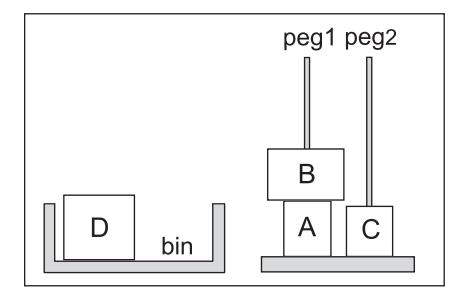
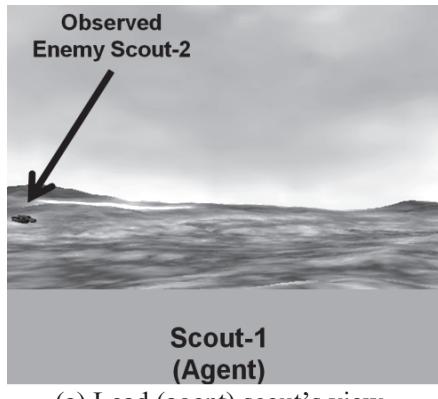
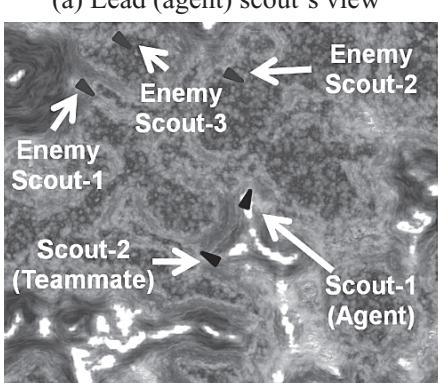
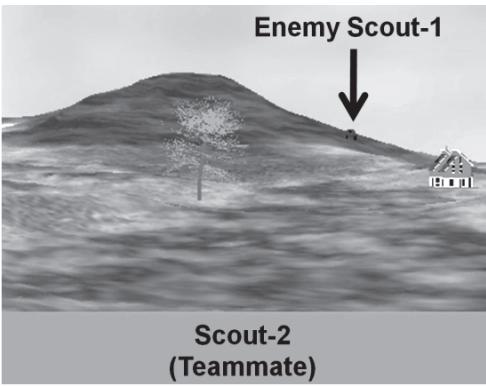
| Claim | Source | Use in lecture | Limit |
|---|---|---|---|
| The chapter introduces visual and spatial representations. | PDF page 252 | Grounds the representation lens. | Lecture synthesis should cite this anchor and avoid replacing the source chapter. |
| Perceptual pointers and predicate extraction are key subsections. | PDF page 258 | Supports the bridge diagram. | Lecture synthesis should cite this anchor and avoid replacing the source chapter. |
| The chapter covers image creation, projection, retrieval, and simulation. | PDF page 262 | Supports the operation sequence. | Lecture synthesis should cite this anchor and avoid replacing the source chapter. |
Tensions and assumptions
Where the chapter should provoke careful interpretation.
Modality bridge
Imagery gives symbolic control richer material.
The architecture can reason with spatially grounded representations instead of only abstract descriptions.
Integration challenge
Multiple representation types require careful interfaces.
The more modality-specific processing Soar adds, the more important the boundaries among stores and operations become.
Assumption register
- Lecture explanations paraphrase and synthesize the chapter rather than reproducing it.
- Generated diagrams are instructor-created interpretive diagrams, not copied book figures.
- Claims about modern relevance should be treated as course synthesis unless a later source is added.
Seminar exercise
A concrete activity to turn reading into usable understanding.
Applied task
Describe a simple spatial task twice: once as symbolic predicates and once as an imaginal operation sequence. Identify what each representation makes easier.
Use the source anchors above when defending the answer.
- Where does symbolic reasoning need modality-specific support?Q1
Prepare an answer with at least one source anchor or a clearly labeled inference.
- What does a perceptual pointer buy architecturally?Q2
Prepare an answer with at least one source anchor or a clearly labeled inference.
- How should Soar prevent imagery operations from becoming an isolated subsystem?Q3
Prepare an answer with at least one source anchor or a clearly labeled inference.
| Moment | Action | Owner |
|---|---|---|
| Before class | Read the chapter note and inspect selected figures. | Student |
| During class | Diagram one mechanism step without notes. | Seminar group |
| After class | Add one claim-evidence-limit row to the course matrix. | Student |
Sources
Trace lecture claims to page anchors, extracted figures, and generated project files.
Reviewed sources
- Chapter 10 - Visuospatial Processing with Mental Imagery chapter anchor
- Printed start 247; PDF pages 252-274.
- Chapter 10 - Visuospatial Processing with Mental Imagery opening page
- Primary opening source for the chapter note.
- Chapter 10 - Visuospatial Processing with Mental Imagery closing page
- End of the chapter page range used for synthesis and review.
- Selected figure 1 from Chapter 10 - Visuospatial Processing with Mental Imagery
- Extracted image on PDF page 258.
- Selected figure 2 from Chapter 10 - Visuospatial Processing with Mental Imagery
- Extracted image on PDF page 259.
- Selected figure 3 from Chapter 10 - Visuospatial Processing with Mental Imagery
- Extracted image on PDF page 259.
- Selected figure 4 from Chapter 10 - Visuospatial Processing with Mental Imagery
- Extracted image on PDF page 259.
- The chapter introduces visual and spatial representations.
- Grounds the representation lens.
- Perceptual pointers and predicate extraction are key subsections.
- Supports the bridge diagram.
- The chapter covers image creation, projection, retrieval, and simulation.
- Supports the operation sequence.