Reading contract
What the chapter note asks the reader to do.
Chapter thesis
Chapter 12 tests Soar at the integration level: the question is not whether a single mechanism works, but whether multiple architectural capabilities cooperate in coherent agent behavior.
Assess multi-capability demonstrations as evidence for architectural integration, distinguishing what they show about Soar's combined mechanisms from what remains unproven.
Learning objectives
- Identify which mechanisms are combined in each demonstration.
- Distinguish integrated evidence from isolated mechanism evidence.
- Use the Chapter 2 requirement matrix as the benchmark.
- Name limitations that demonstrations do not settle.
Architectural problem
The problem this chapter adds to the course argument.
Separate chapters can make separate mechanisms look plausible. A cognitive architecture, however, is judged by whether mechanisms compose under task pressure. Chapter 12 supplies demonstrations for that question.
Key idea 1
Integration is itself an architectural claim.
The chapter invites requirement-based evaluation.
Key idea 2
Demonstrations should be read against explicit requirements.
Mechanisms are judged by how they compose.
Key idea 3
Multi-capability behavior can reveal interface assumptions.
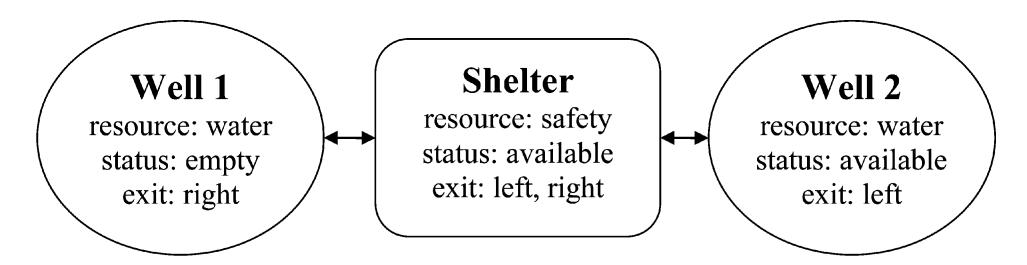
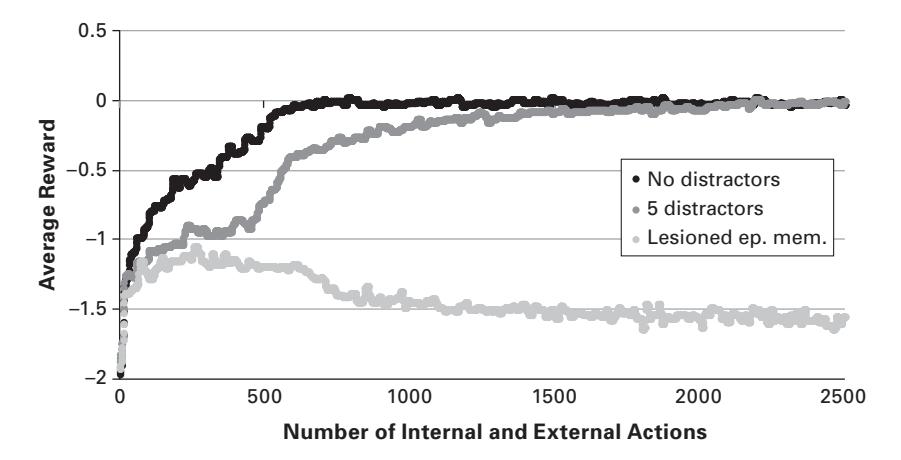
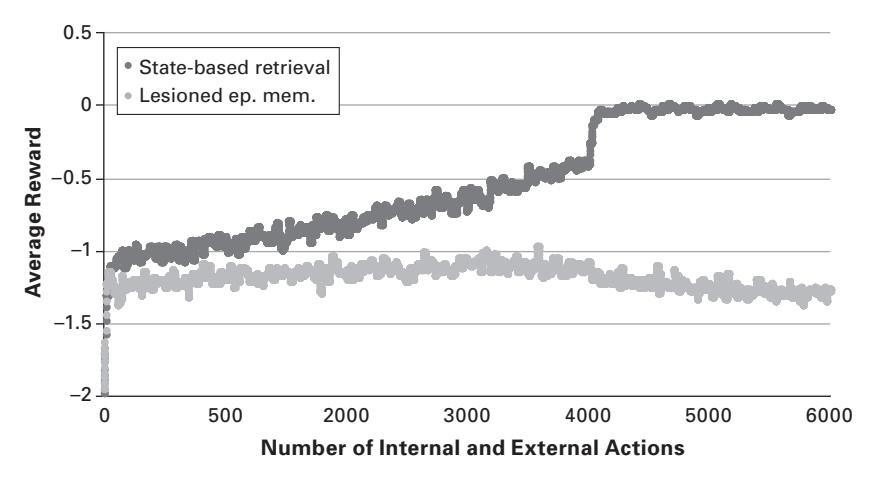
Some demonstrations involve memory use and reinforcement learning together.
Key idea 4
Evidence from demonstrations is persuasive only when scoped carefully.
The lecture should separate demonstration evidence from broad architectural claims.
Mechanism map
A generated diagram and step sequence for the chapter mechanism.
The demonstrations combine memory, learning, control, and task structure. The lecture note should treat each demonstration as benchmark evidence: what capabilities are involved, what behavior is produced, and which requirement it speaks to.
Mechanism sequence
- Define the demonstration task.
- Identify participating Soar capabilities.
- Trace the interaction among control, learning, and memory.
- Compare observed behavior against requirements.
- Record what the demonstration leaves open.
Polymathic lenses
How the chapter reads across cognitive science, AI architecture, learning, memory, and practice.
| Lens | Use in lecture |
|---|---|
| Benchmarking | The chapter invites requirement-based evaluation. |
| Integration | Mechanisms are judged by how they compose. |
| Learning | Some demonstrations involve memory use and reinforcement learning together. |
| Methodology | The lecture should separate demonstration evidence from broad architectural claims. |
Figures and evidence
Book figures and page anchors that should ground the lecture.
| Claim | Source | Use in lecture | Limit |
|---|---|---|---|
| The chapter includes learning to use episodic memory with reinforcement learning. | PDF page 290 | Grounds the multi-capability claim. | Lecture synthesis should cite this anchor and avoid replacing the source chapter. |
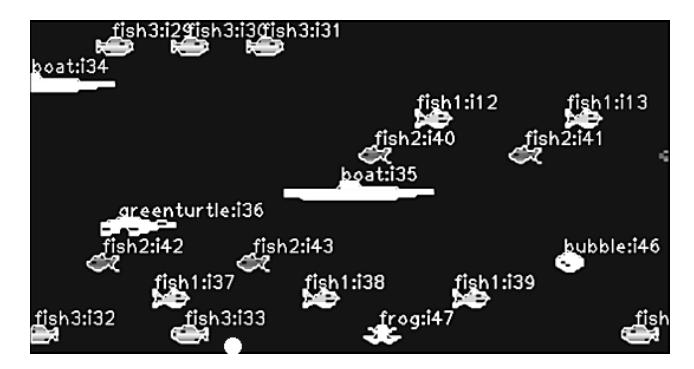
| The chapter includes a board-game task and agent structure. | PDF page 298 | Supports task-phase analysis. | Lecture synthesis should cite this anchor and avoid replacing the source chapter. |
| The chapter analyzes requirements after demonstrations. | PDF page 306 | Supports benchmark interpretation. | Lecture synthesis should cite this anchor and avoid replacing the source chapter. |
Tensions and assumptions
Where the chapter should provoke careful interpretation.
Evidence for integration
Multiple mechanisms can cooperate in one behavior.
The demonstrations show why architecture-level composition matters.
Evidence boundary
A demonstration is not a complete generality proof.
Each task tests a chosen slice of the architecture and must be interpreted with limits.
Assumption register
- Lecture explanations paraphrase and synthesize the chapter rather than reproducing it.
- Generated diagrams are instructor-created interpretive diagrams, not copied book figures.
- Claims about modern relevance should be treated as course synthesis unless a later source is added.
Seminar exercise
A concrete activity to turn reading into usable understanding.
Applied task
Pick one demonstration and build a capability matrix: rows are mechanisms, columns are task phases, and cells explain what each mechanism contributes.
Use the source anchors above when defending the answer.
- What makes a demonstration architecture-level evidence?Q1
Prepare an answer with at least one source anchor or a clearly labeled inference.
- Which requirement is best supported by the chapter's examples?Q2
Prepare an answer with at least one source anchor or a clearly labeled inference.
- What additional demonstration would strengthen the course's confidence?Q3
Prepare an answer with at least one source anchor or a clearly labeled inference.
| Moment | Action | Owner |
|---|---|---|
| Before class | Read the chapter note and inspect selected figures. | Student |
| During class | Diagram one mechanism step without notes. | Seminar group |
| After class | Add one claim-evidence-limit row to the course matrix. | Student |
Sources
Trace lecture claims to page anchors, extracted figures, and generated project files.
Reviewed sources
- Chapter 12 - Demonstrations of Multiple Architectural Capabilities chapter anchor
- Printed start 287; PDF pages 290-308.
- Chapter 12 - Demonstrations of Multiple Architectural Capabilities opening page
- Primary opening source for the chapter note.
- Chapter 12 - Demonstrations of Multiple Architectural Capabilities closing page
- End of the chapter page range used for synthesis and review.
- Selected figure 1 from Chapter 12 - Demonstrations of Multiple Architectural Capabilities
- Extracted image on PDF page 291.
- Selected figure 2 from Chapter 12 - Demonstrations of Multiple Architectural Capabilities
- Extracted image on PDF page 294.
- Selected figure 3 from Chapter 12 - Demonstrations of Multiple Architectural Capabilities
- Extracted image on PDF page 295.
- Selected figure 4 from Chapter 12 - Demonstrations of Multiple Architectural Capabilities
- Extracted image on PDF page 298.
- The chapter includes learning to use episodic memory with reinforcement learning.
- Grounds the multi-capability claim.
- The chapter includes a board-game task and agent structure.
- Supports task-phase analysis.
- The chapter analyzes requirements after demonstrations.
- Supports benchmark interpretation.